The Polymer Laboratory of Razi Metallurgical Research Center was established to conduct research testing on various plastic, elastomeric, composite, and foam materials, as well as to provide technical services and consulting. The main responsibility of this laboratory is to conduct research and identify effective solutions to address problems in the polymer industry. In 2007, the laboratory obtained ISO/IEC 17025 accreditation from the Institute of Standards and Industrial Research of Iran (ISIRI), followed by accreditation from the German DAP institute in 2008.
The activities of the Polymer Laboratory include the identification and evaluation of the physical, mechanical, thermal, and other properties of polymers in accordance with ISIRI, ASTM, ISO, DIN, EN, JIS, KES, PSA, JASO, and other standards. In addition to the tests listed below, this department has the equipment and capabilities to perform various functional tests. Its primary objective is to utilize laboratory facilities and equipment for research and development.
To enhance transparency in service delivery and in compliance with quality management system requirements, Razi Metallurgical Research Center allows customers or their designated representatives to attend testing procedures, where technically and safely feasible.
With prior coordination, customers can observe the testing process firsthand and verify the implementation of test methods, the use of equipment, and compliance with relevant requirements.
This service is provided in accordance with the principles of impartiality, confidentiality, and technical independence. Customer attendance does not affect the testing process or the validity of the results in any way.
Research and Laboratory Services Available at the Polymer Laboratory
- Analysis of the Mechanical and Physical Properties of Polymers (Rubber, Plastics, Composites): Tensile strength, elongation at break, compressive strength, cold crushing strength, compressive modulus, flexural strength, flexural modulus, tear strength, adhesion strength, Izod and Charpy impact strength (notched and unnotched), falling dart impact, Shore A and D hardness, Barcol hardness, density measurement, porosity determination, Vicat softening temperature, heat deflection temperature (HDT), abrasion of soft materials, resilience, compression set at different temperatures, melt flow rate (MFR), carbon black dispersion, shrinkage, water absorption, moisture content, dimensional change evaluation, ring stiffness, and puncture resistance.
- Analysis of the Chemical Properties and Identification of Polymers (Rubber, Plastics, Composites): FTIR (material identification), oil (plasticizer) content and type in rubber, content and type of mineral fillers, carbon black content in polyolefins, polymer content in selected samples, resin content in composites, and ash content.
- Thermal analysis of polymers (rubber, plastics, composites): Differential Scanning Calorimetry (DSC), including measurement of melting temperature (Tm), glass transition temperature (Tg), crystallization temperature, and oxidation induction time (OIT).
- Evaluation of Polymer Resistance to Environmental and Chemical Conditions: Aging (thermal aging), low-temperature testing, weight and volume changes, evaluation of changes in various solutions, chemicals, and oils, assessment of all properties after exposure to specified conditions, and ozone resistance.
- Polymer Sample Preparation in Accordance with Standards: Curing raw rubber and preparing sheets and discs, injection molding and preparing sheets from granules, cutting and preparing various plastics and composites using CNC machining, punching various rubbers and thermoplastic elastomers, reducing the thickness of rubber and composite samples, and cutting stone and brick.
- Oil and Paraffin Analysis:
Oil: Pour point determination, analysis of 19 elements in oil, viscosity measurement at different temperatures, viscosity index determination, and more.
Paraffin: Melting temperature determination, oil content determination, and FTIR analysis. - Analysis of Selected Chemical, Mechanical, and Thermal Properties of Mineral Samples (Cement, Rock Wool, Ceramics, etc.): FTIR (identification of binders or resins in mineral materials), compressive strength measurement, tensile strength, flexural strength, chemical resistance, water absorption, moisture content determination, porosity measurement, and density.
- Analysis of Thermal Properties of Various Samples: DSC (Differential Scanning Calorimetry) is an analytical technique used to investigate the thermal behavior of various materials in detail.
The DSC instrument at Razi Metallurgical Research Center, manufactured by NETZSCH, Germany, is used to measure the glass transition temperature (Tg), melting temperature, crystallization temperature, OIT, and melting enthalpy of various materials with high accuracy and in the shortest possible time, within a temperature range of -100°C to 350°C. - (Thermal Gravimetric Analysis ) TGA : TGA is a thermal analysis technique and one of the most widely used methods for material analysis. In this method, changes in sample weight are recorded as a function of temperature.
-
The TGA instrument at Razi Metallurgical Research Center operates over a temperature range from ambient temperature to 900°C, under nitrogen or air atmospheres, with heating rates of 10 to 20°C per minute.
Testing can be performed on various polymers (rubber, plastics, and composites) and mineral materials, provided that the samples are neither explosive nor liquid.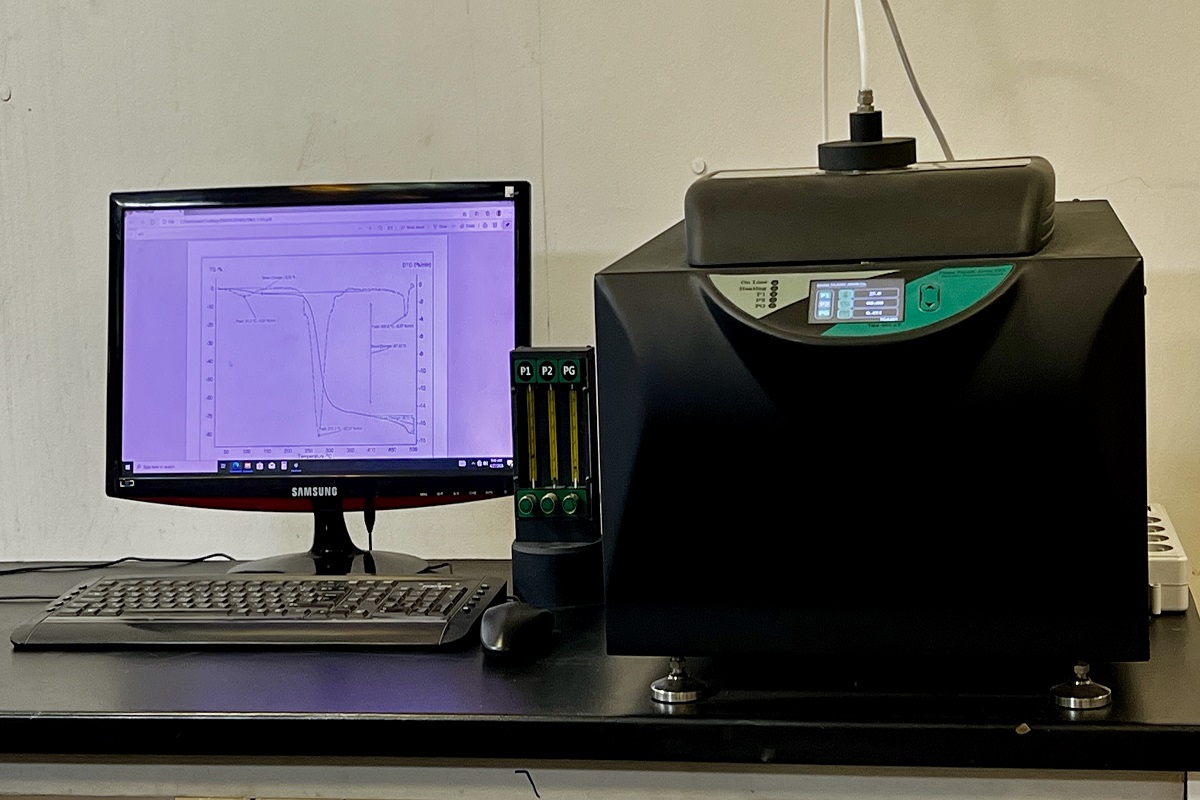
- Investigation of Polymer Degradation Causes (Rubber, Plastics, Composites): Identification of degradation causes, provision of appropriate solutions, and recommendation of alternative polymers to resolve the problem.
- Correlation of Chemical and Mechanical Polymer Analyses and Grade Identification: Comparison of results with recognized domestic and international standards, comparison with datasheets supplied with samples, preparation of conformity certificates in accordance with standards, and identification of grades for selected polymers.
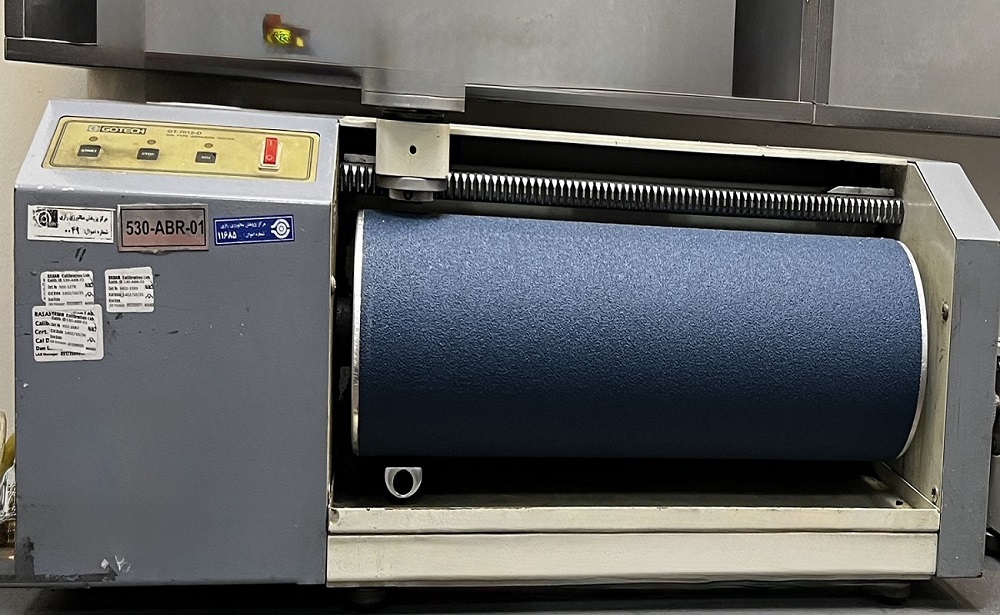
- Evaluation of Abrasion Resistance of Rubber Products According to the Following Standards:
-
ISO 4649
INSO 7900
ASTM D5963
- Evaluation and Performance Testing of Polymers
Most Commonly Tested Products
Various types of rubber and plastics, composites, hoses, pipes, neoprene, geotextiles, geogrids, geomembranes, building façade and shipbuilding composites, waterstops, various types of foam, wood, belts, floor coverings, nylon, automotive components, cement, ropes, concrete, bricks, ceramics, tiles, various insulation materials, uncured and cured resins, paints, various types of mastic, railway components (guides, pads, and roll plates), household appliances and toys, water-sealing strips, stone, rock wool, various O-rings and diaphragms, and more.
Projects Completed at the Polymer Laboratory
- Investigation of the Cause of Failure of High Impact Polystyrene (HIPS) Samples Used in Refrigerator Interior Components
- Investigation of the Cause of Failure of Acrylonitrile Butadiene Styrene (ABS) Samples Used in Refrigerator Interior Components
- Investigation of the Cause of Failure of Acrylonitrile Butadiene Styrene (ABS) Samples Used in Fan Coil Units
- Investigation of the Cause of Polyester Fiber Degradation After 10 Days of Use
- Investigation and Determination of the Manufacturing and Molding Process for Producing a Urea Formaldehyde-Based Component
- Investigation and Identification of the Causes of Peeling and Detachment of Paint Coatings Applied to a Metal Surface
- Investigation of the Causes of O-Ring Failure During Operation and Recommendation of a More Suitable Alternative to Prevent Recurrence
- Investigation of the Causes of Bottle Cap Leakage Over Time and Recommendation of a Suitable Material Grade
- Investigation of Plastic Bottle Bodies That Cause Differences in Label Adhesion Durability
- Investigation of the Causes of Rubber and Composite Gasket Failure in the Gas Industry
- Identification of Selected Polymer Grades and Matching Them with Available Grades